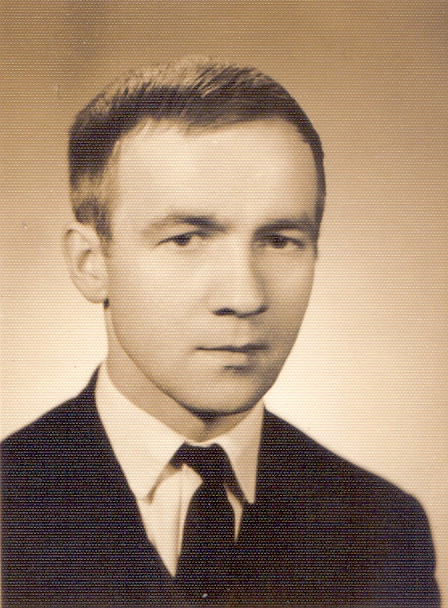
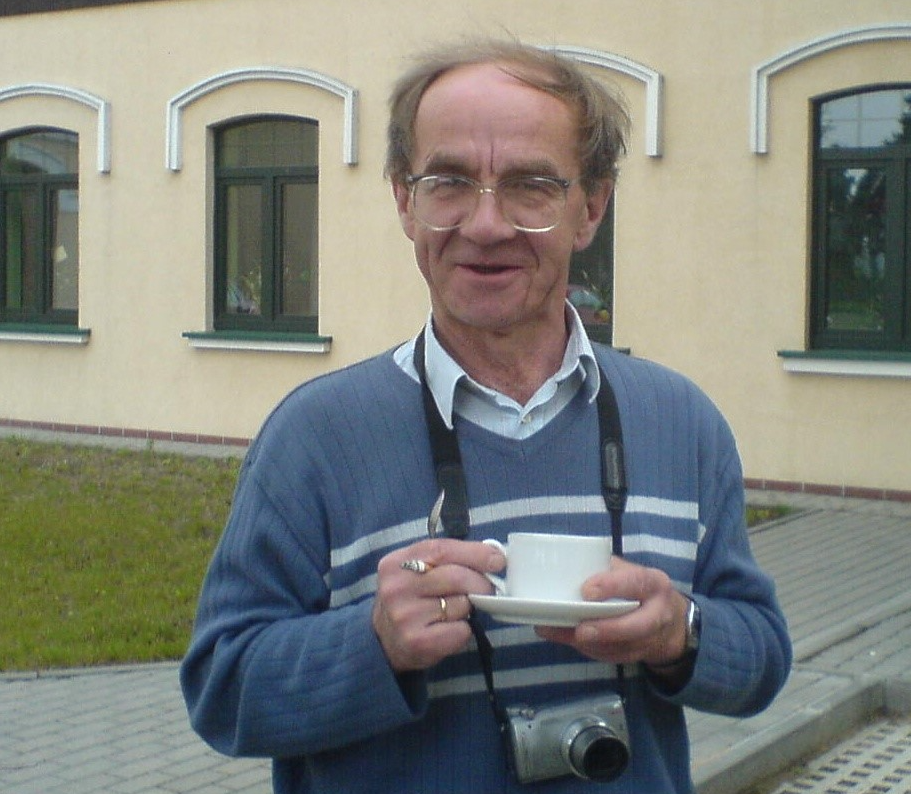
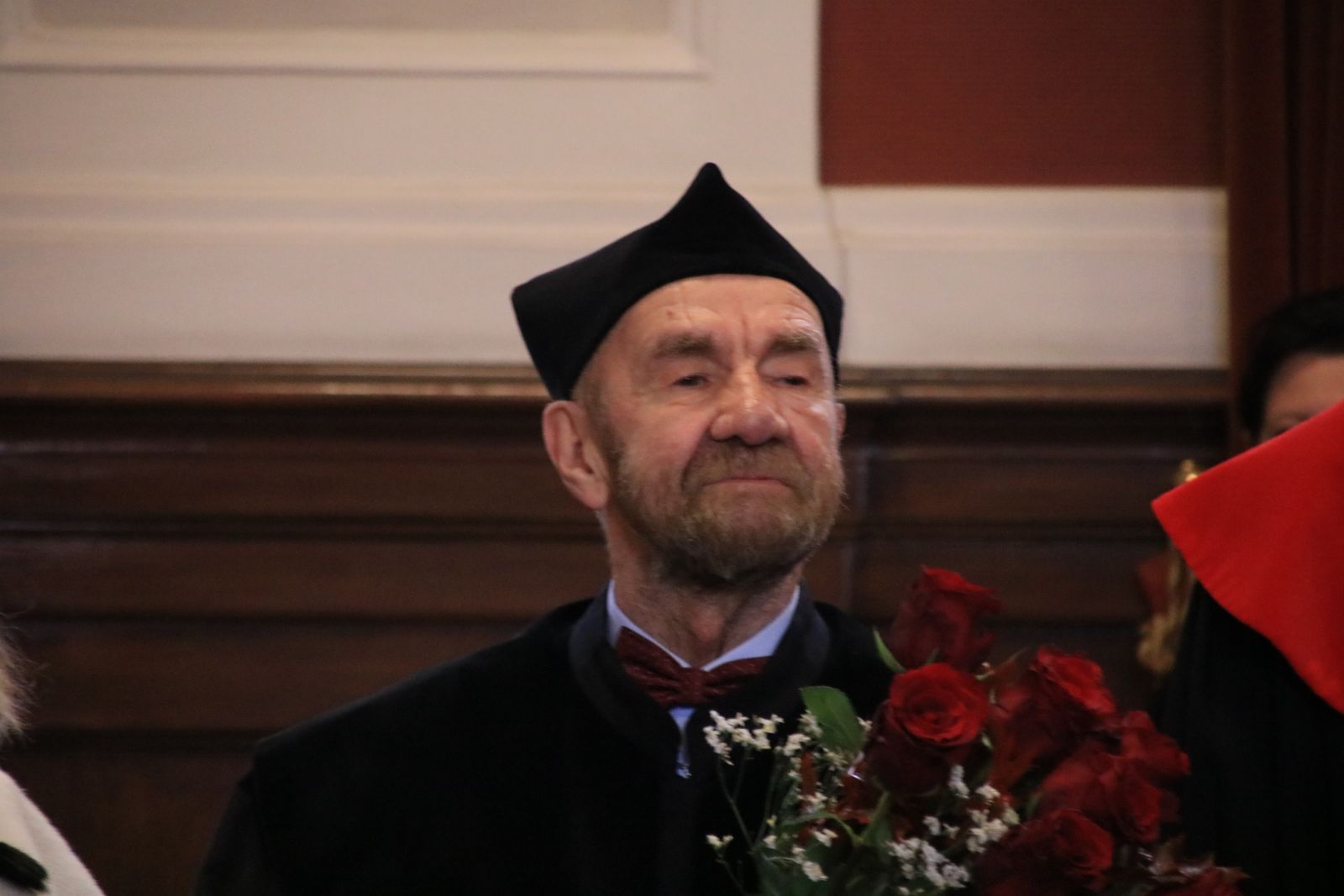
Lech Drewnowski
1944–2023Scientific Career
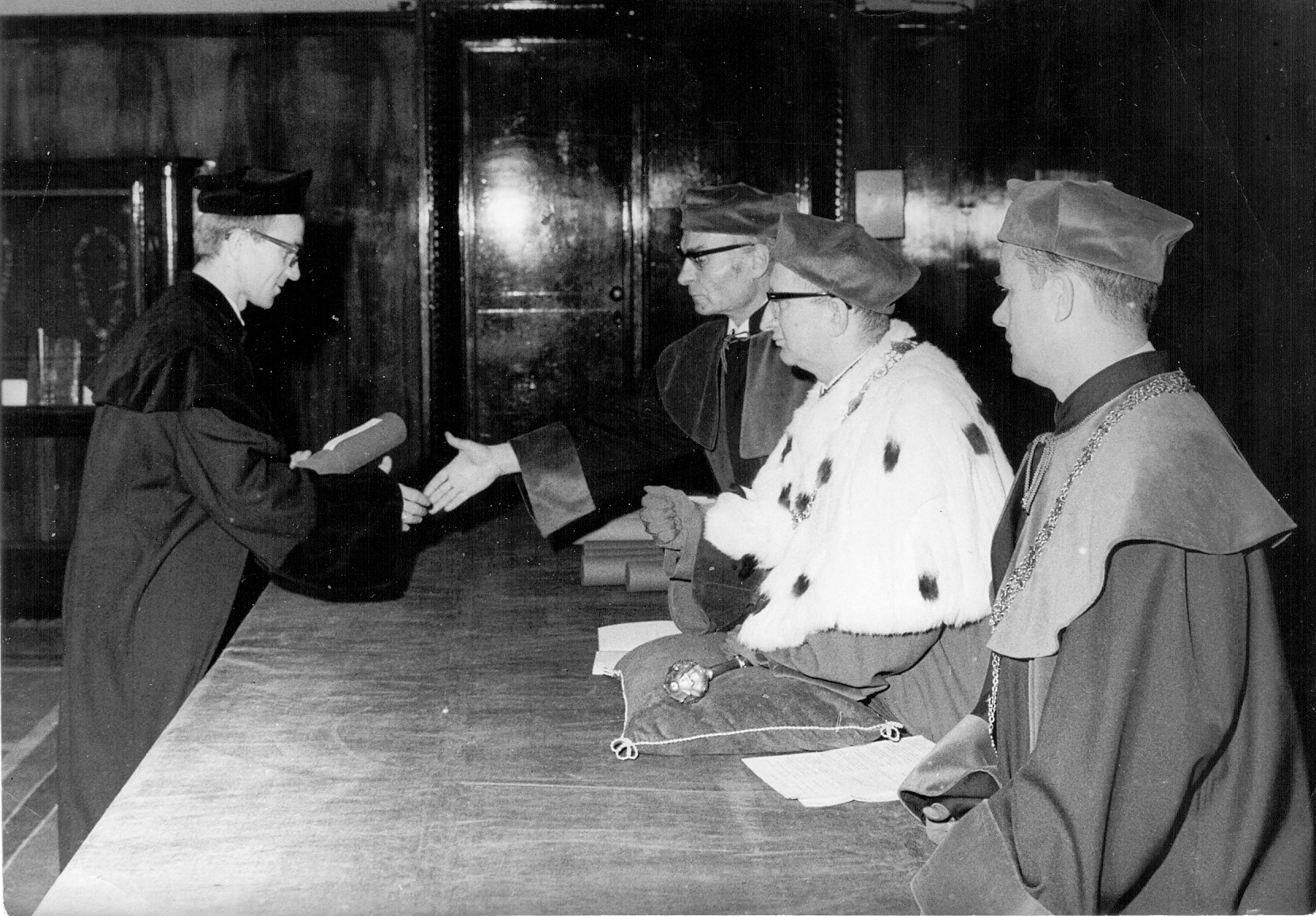
Lech Drewnowski was an eminent member of Poznań School of Mathematics founded by Władysław Orlicz after the Second World War and one of the best Orlicz's pupils. He started an academic career at Adam Mickiewicz University in Poznań in 1966 when he had finished mathematical studies on the Faculty of Mathematics, Physics and Chemistry. Five years later, in 1971, Lech Drewnowski obtained Ph.D. defending the thesis On some problems in the theory of spaces of integrable functions which was prepared under a supervision of Władysław Orlicz.
The thesis, published in 1972 in the Bulletin of the Polish Academy of Science as a three-part paper Topological rings of sets, continuous set functions, integration, had an essential influence on the measure theory and it belongs till now to the most frequently cited Drewnowski's works (in the fifth decade after publication, there were several dozen such citations). This dissertation has become a must-read for anyone interested in the theory of vector measures, and the mathematical world has given it the name masterful study of Fréchet–Nikodym topologies and their applications. Drewnowski's Ph.D. Thesis, as well as his habilitation Decompositions of set functions and existence of scalar measures topologically equivalent to vector measures were honored by the Award of the Ministry of Science, Higher Education and Technology of Poland.
Research and Impact
During over fifty years of uninterrupted scientific activity, Professor Lech Drewnowski published almost 130 works. It is worth emphasizing that 10 of them were published between 2017 and 2021, i.e., during the author's retirement. In the most general classification of Professor Drewnowski's work, it should be placed within the scope of functional analysis and the theory of measures and vector integrals.
A characteristic feature of his works, in all periods, is their focus on the most current problems in the two disciplines mentioned, such as: decompositions and convergence theorems for set functions, the control measure problem, the Pettis integral, ranges of measures, measures with values in topological Riesz spaces, minimal spaces, bases in non-locally convex topological vector spaces, the Orlicz–Pettis type theorems, series in topological vector spaces, barreledness of spaces of vector valued functions and Nikodym property, boolean algebras of projections, Gelfand–Phillips property, copies of the spaces of bounded sequences or sequences tending to zero, structures of topological Riesz spaces, orthogonally additive functionals.
Drewnowski's works are characterized by perfect substantive and editorial diligence. The former manifests itself in the author's in-depth analysis of a problem, leading to the identification of initially invisible and far-fetched consequences of the resulting solution. Furthermore, this solution is often presented for a much more general situation than the one formulated in the problem. Drewnowski possessed a gift for exceptionally clear and elegant presentation of proofs.
Drewnowski created a research group that carried out many projects financed under the Central Programme for Basic Research, and later by the State Committee for Scientific Research and then by the National Science Centre. The group investigated the structure of linear-topological spaces, in particular the spaces of measurable, continuous, harmonic, and holomorphic functions and the related measure spaces, as well as methods of functional analysis used in problems of classical analysis and topology.
The Teacher
Lech Drewnowski was a highly regarded academic teacher and supervisor. He presented his lectures in a very interesting, lively, and exact manner. He had the gift of speaking in an accessible and understandable way about complicated matters characterized by a high level of abstraction. He was a true supervisor of his doctoral students, for whom he spared no time, was always available to them, willing to discuss, explain, help, support and advise. The list of Ph.D. Theses written under the supervision of Lech Drewnowski counts eleven names.
Drewnowski's seminar, led for over forty years, was a true scientific school: each meeting took several hours when participants discussed mathematics, presented their new results and current papers published in journals. He tirelessly tried to fulfill the most difficult task of a teacher expressed in the words of Marcus Tullius Cicero:
"Non paranda nobis solum sed fruenda etiam sapientia est"
(we should not only acquire wisdom, but also know how to use it)
Prepared by Witold Wnuk